Are VPNs Still Private in 2026? Here’s the Honest Answer
For the longest time, VPNs were marketed like a magic button. Click “Connect” and suddenly you’re invisible. Anonymous. Untouchable.
In 2026, that idea feels a little naïve.
I’m not saying VPNs are useless. I use one. Most privacy-conscious people do. They still encrypt your traffic, hide your IP address, and stop your ISP from seeing what you’re browsing. If you’re on public Wi-Fi at a hotel or airport, a VPN is absolutely better than nothing.
But here’s the part that doesn’t get advertised: hiding your IP address is no longer the same thing as being private.
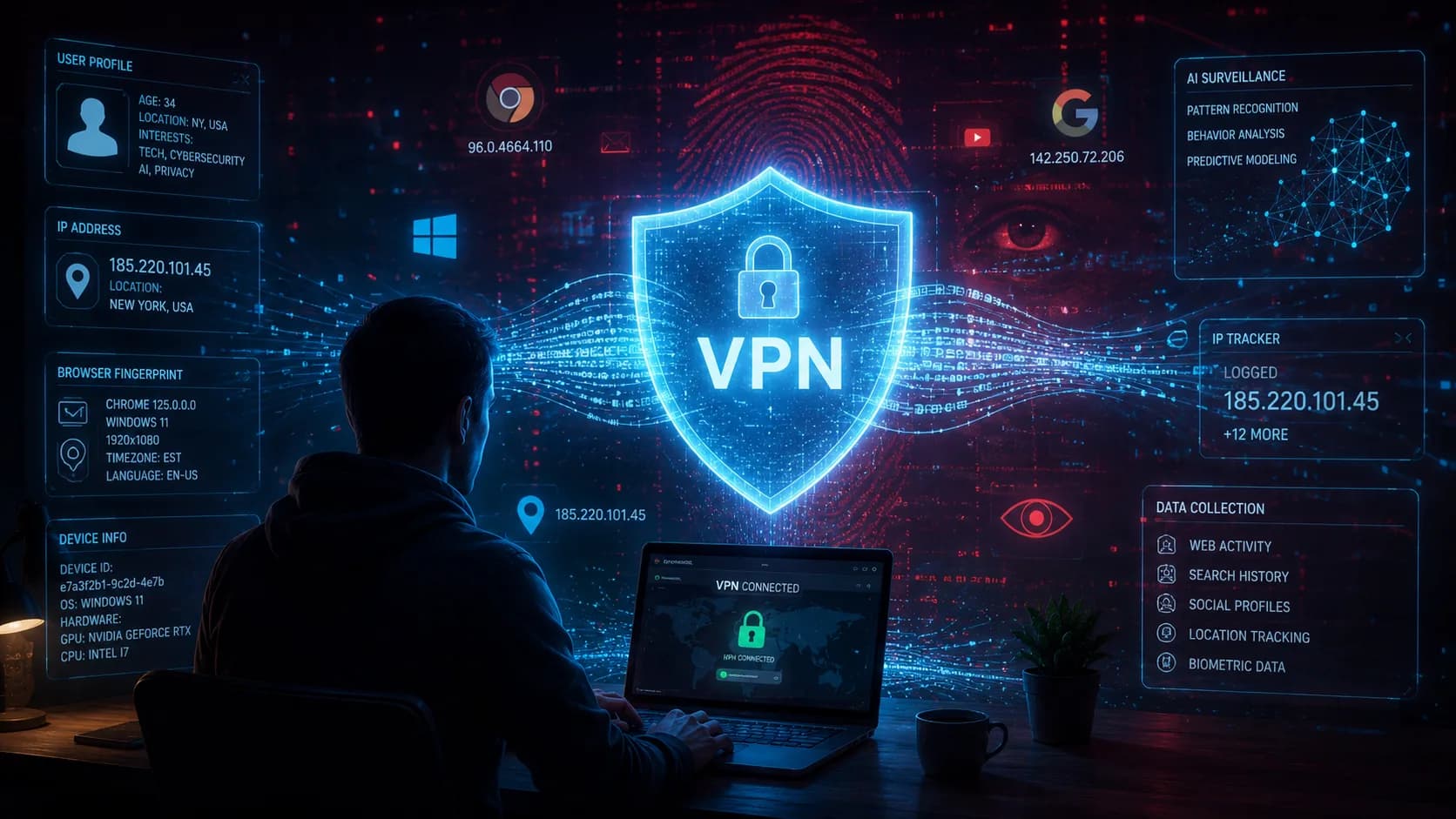
Today, tracking has evolved. Websites don’t just look at where you’re connecting from — they look at what you’re connecting with. Your browser, your screen resolution, your device type, your installed fonts, even how your graphics card renders images. All of that can be combined into something called a fingerprint. And that fingerprint can follow you around even if you change VPN servers every day.
In other words, your IP changes. Your device doesn’t.
Then there are leaks. DNS leaks, IPv6 leaks, WebRTC leaks — issues that sound technical but basically mean your real IP can slip outside the encrypted tunnel without you realizing it. Most people never test their connection. They just assume the app is doing its job.
And we haven’t even touched the “no-logs” promise. Every VPN provider claims it. But not all no-logs policies are equal. Some don’t log browsing activity but still store connection metadata. Some operate in countries with strict data laws. Some have changed ownership quietly over the years. At the end of the day, using a VPN still requires trust — and trust isn’t the same thing as proof.
So are VPNs still private?
Yes… in a limited sense.
They protect your connection. They stop ISP tracking. They secure public Wi-Fi. They make basic IP-based tracking harder. That’s real value.
But they don’t erase your digital footprint. They don’t stop advanced fingerprinting. They don’t magically make you anonymous in a world powered by AI-driven behavioral tracking.
The biggest misconception in 2026 isn’t that VPNs don’t work. It’s that people expect them to do everything.
Privacy now is layered. A VPN is one layer. Your browser setup is another. Your habits are another. The less you rely on a single tool, the safer you actually are.
So if you’re using a VPN, keep using it. Just don’t confuse encryption with invisibility.
That era is over.
Related Articles

Google isn’t just watching you, it’s building a shadow of you
Google doesn’t just track what you do—it reconstructs you. Every search, video, message, and map location becomes part of a growing digital shadow that knows more about you than you think.
Read More →
When your data ends up on the Dark Web: The ANTS case and what you should know
When personal data leaks, it doesn’t just disappear — it gets sold. Explore how information ends up on the dark web and what the ANTS case teaches us about digital security today.
Read More →
The hidden security risks of AI tools in the workplace
AI tools are transforming the workplace — but they introduce hidden security risks, from data leakage and shadow AI to compliance and integration vulnerabilities.
Read More →