When your data ends up on the Dark Web: The ANTS case and what you should know
Data breaches. Dark web sales. Government platforms being “hacked.”
These aren’t niche cybersecurity topics anymore. Your personal information — name, date of birth, address, email — has become a commodity. And in some corners of the internet, it’s for sale.
One recent example that brought this issue into the spotlight involved Agence Nationale des Titres Sécurisés (ANTS), also known as France Titres — the French government agency responsible for passports, national ID cards, driver’s licenses, and other official documents.
Let’s break down what happened — and why it matters.
The Incident: Alleged Data for Sale on the Dark Web
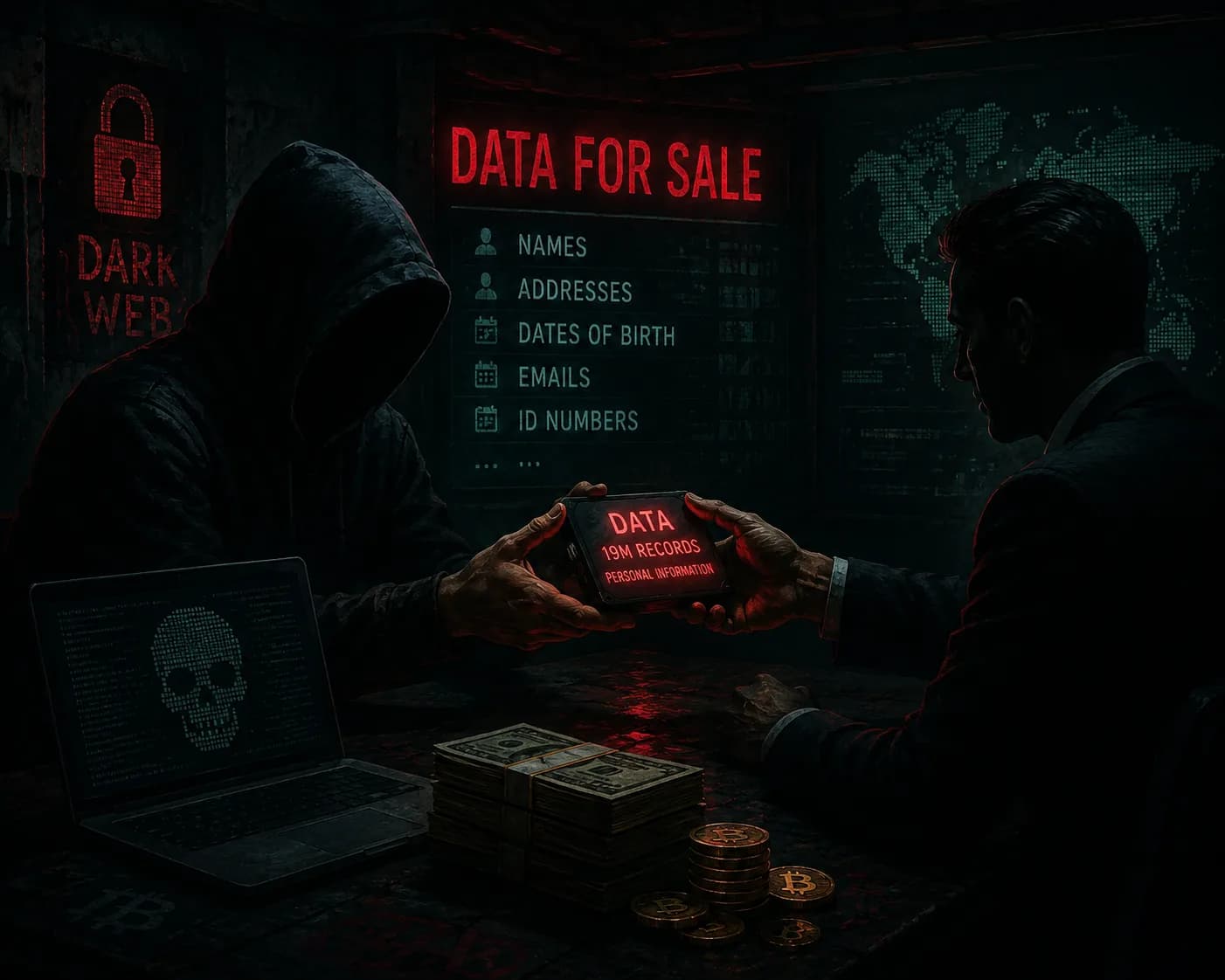
In 2026, a hacker operating under the alias “breach3d” claimed to be selling a massive database allegedly linked to ANTS systems. The dataset was said to contain up to 19 million records, including:
Full names
Dates of birth
Postal addresses
Email addresses
Account-related information
The data reportedly appeared on a dark web forum, where cybercriminals often trade stolen databases.
As soon as the claim surfaced, it triggered concern across France. Was a major government database compromised? Were citizens’ identities exposed?
What ANTS Confirmed (And What Remains Unclear)
ANTS acknowledged that a security incident had occurred on one of its portals and that unauthorized access to certain data could not be ruled out.
However, the agency also stated that:
User accounts were not fully compromised or taken over.
Investigations were ongoing to determine the scope and origin of the leak.
Authorities and cybersecurity experts were working to assess the situation.
As with many breach claims, there’s often a gap between what attackers advertise and what investigators ultimately confirm. Sometimes stolen datasets are exaggerated. Sometimes they’re repackaged from older leaks. Sometimes they’re entirely real.
But once data appears on underground forums, the risk becomes very real — regardless of the final technical details.
What It Means When Data Is “Sold on the Dark Web”
When people hear “dark web,” they imagine something mysterious. In reality, it’s a part of the internet accessible via specialized tools, where anonymity is prioritized.
On these underground marketplaces, stolen data is frequently sold in bulk.
Why?
Because personal data has value. It can be used for:
Identity theft
Financial fraud
Account takeover attempts
Highly targeted phishing campaigns
Social engineering attacks
Sometimes hackers publish a small sample of data to prove authenticity and attract buyers. Once sold, the dataset may circulate across multiple criminal groups — multiplying the risk for victims.
Even if passwords aren’t included, basic personal details can be enough to launch convincing scams.
Why This Matters to You
You might think: “I don’t have anything worth stealing.”
But identity data is not about fame or wealth. It’s about usability.
If someone has your:
Full name
Birthdate
Address
Email
They can craft extremely believable phishing messages. They can impersonate institutions. They can attempt SIM swaps or financial fraud. They can use your information as part of larger identity-fabrication schemes.
And when the alleged source is a government agency — like Agence Nationale des Titres Sécurisés — the perceived credibility makes it even more dangerous.
Trust amplifies impact.
How to Protect Yourself After a Data Leak
Whether the breach is confirmed, partial, or under investigation, the response should be proactive.
Here’s what you can do:
1. Enable Multi-Factor Authentication (MFA)
If someone gets your password, MFA can stop them from accessing your account.
Use authenticator apps or hardware security keys whenever possible.
2. Monitor Your Accounts Closely
Watch for:
Unusual login alerts
Password reset emails you didn’t request
Suspicious financial transactions
Messages asking you to “confirm” personal data
Early detection makes a huge difference.
3. Be Extra Cautious With Phishing
After a publicized data leak, phishing campaigns usually spike.
Attackers may send messages pretending to be:
The affected organization
Government authorities
Security teams
Banks
Never click links in unsolicited emails. Visit official websites directly by typing the address into your browser.
4. Avoid Reusing Passwords
If one service is compromised and you reuse the same password elsewhere, attackers can attempt credential stuffing across other platforms.
Use a password manager. It’s one of the simplest and most effective defenses.
The Bigger Lesson
Data breaches are no longer rare events. They are part of the digital ecosystem we live in.
The ANTS case — whether ultimately classified as a limited incident or a major breach — highlights a critical truth:
Our data has economic value and anything with value will be targeted. Cybersecurity is no longer just a corporate issue. It’s personal. It’s civic. It’s global. The best defence isn’t fear — it’s awareness, layered security, and healthy skepticism because once data hits the dark web, you can’t pull it back but you can make it much harder to exploit.
Related Articles

The hidden security risks of AI tools in the workplace
AI tools are transforming the workplace — but they introduce hidden security risks, from data leakage and shadow AI to compliance and integration vulnerabilities.
Read More →
Are VPNs Still Private in 2026? Here’s the Honest Answer
VPNs were once sold as a magic invisibility switch — click “connect” and you disappear online. In 2026, that promise doesn’t hold up the same way. While VPNs still encrypt your traffic and hide your IP address, modern tracking goes far beyond that. From browser fingerprinting to subtle connection leaks, staying private today requires more than just turning on an app. So the real question isn’t whether VPNs work — it’s whether they’re enough.
Read More →
Google isn’t just watching you, it’s building a shadow of you
Google doesn’t just track what you do—it reconstructs you. Every search, video, message, and map location becomes part of a growing digital shadow that knows more about you than you think.
Read More →