
The hidden security risks of AI tools in the workplace
AI showed up at work quietly — and then all at once.
One week someone was experimenting with ChatGPT from OpenAI to rewrite an email. A month later, marketing was generating campaign drafts with Google’s Gemini, finance was summarizing spreadsheets with Microsoft Copilot, and engineering was debugging code with an AI assistant plugged directly into the repo.
Productivity jumped. Meetings got shorter. First drafts got faster.
And almost nobody stopped to ask: What is this doing to our security posture?
AI adoption in the workplace hasn’t followed the usual path of procurement reviews, architecture diagrams, and risk assessments. It’s been organic, bottom-up, and fast. That speed is exciting — but it also hides risks most organizations aren’t prepared for.
Let’s talk about the ones that don’t make the sales decks.
The Quiet Data Drain
Generative AI systems run on prompts. Prompts are data. And in the workplace, data is rarely harmless.
When an employee pastes a contract into an AI tool to “clean up the language,” they’re sharing legally sensitive information. When a sales manager uploads a customer list to “find patterns,” that’s personally identifiable data. When a developer drops proprietary code into a chatbot to debug an issue, that’s intellectual property.
The scary part isn’t malicious intent. It’s convenience.
AI tools are so frictionless that they bypass the mental pause we normally have before sending data outside the company. The line between “internal brainstorming” and “external processing” gets blurry fast.
And when employees use free consumer versions of AI tools instead of enterprise accounts, the organization often has zero visibility into what’s being shared.
That’s not just shadow IT anymore — it’s shadow AI.
The Terms of Service Nobody Reads
Most teams assume that “AI is AI.” But there’s a world of difference between enterprise-grade agreements and public versions of the same tool.
Some platforms retain prompts for debugging. Some store logs. Some use data for model improvement under certain conditions. Others don’t — but only if configured correctly.
The risk isn’t necessarily that providers are careless. It’s that organizations don’t always understand the nuances of how their data is handled.
A licensing mismatch — or a single employee signing up with a personal email — can quietly undermine company-wide security assumptions.
When AI Becomes a New Attack Surface
The real shift happens when AI tools stop being standalone chat windows and start connecting to internal systems.
Today’s AI assistants can access:
Email inboxes
Shared drives
CRMs
Ticketing systems
Code repositories
To work “seamlessly,” they’re often granted broad permissions.
Now imagine a compromised account. Or a cleverly crafted prompt injection hidden inside a document. Or an integration misconfigured with excessive API privileges.
Suddenly, the AI assistant isn’t just a helpful tool. It’s a centralized gateway into multiple systems.
Attackers don’t need to break through five doors if the AI is holding the keys to all of them.
The Hallucination Problem No One Talks About
We tend to frame AI risks in terms of data breaches. But there’s a quieter threat: overtrust.
AI models sometimes generate confident, plausible, and completely incorrect output. In casual use, that’s annoying. In production environments, it can be dangerous.
Imagine:
Security policies drafted with subtle errors
Infrastructure scripts generated with misconfigurations
Legal language that introduces compliance gaps
Code with hidden vulnerabilities
If teams treat AI output as authoritative instead of provisional, mistakes slip through — not because someone was negligent, but because the tool sounded certain.
Security failures don’t always start with hackers. Sometimes they start with misplaced confidence.
Compliance in the Age of Generative AI
Regulated industries face an additional layer of risk.
Healthcare data. Financial records. Client communications. These aren’t just business assets — they’re legally protected information.
AI systems that process, store, or transmit this data across borders can trigger regulatory obligations many organizations haven’t fully mapped.
And regulators are paying attention.
The uncomfortable truth is that many companies adopted AI before updating their compliance frameworks to account for it.
Intellectual Property: The Invisible Leak
One of the most underappreciated risks is IP exposure.
Trade secrets aren’t always labeled as such. They live inside product descriptions, pricing strategies, internal documentation, and code snippets — exactly the kind of material employees paste into AI tools to “make better.”
Even if no breach occurs, the act of externalizing proprietary thinking changes the organization’s risk profile.
IP loss isn’t always dramatic. Sometimes it’s gradual, subtle, and discovered only when it’s too late.
Why This Is Happening Now
AI tools feel different from traditional enterprise software.
They’re intuitive. They’re easy to access. They don’t require long onboarding cycles. A single employee can meaningfully integrate AI into their workflow in under an hour.
That’s unprecedented.
Security frameworks, on the other hand, were built for slower rollouts — for systems that pass through procurement, IT review, and compliance checkpoints.
AI doesn’t wait for that.
And so organizations find themselves in a strange position: simultaneously more productive and more exposed.
Moving Forward Without Slamming the Brakes
The answer isn’t banning AI. That rarely works — and it often drives usage underground.
Instead, organizations need to mature alongside the tools.
That means:
Clear, realistic AI usage policies
Defined boundaries around sensitive data
Enterprise licensing where appropriate
Tightened access controls on integrations
Employee training on prompt hygiene and AI-specific threats
Ongoing monitoring for shadow AI activity
Most importantly, it means recognizing that AI isn’t “just another SaaS tool.” It’s a new layer in the technology stack — one that processes language, aggregates context, and increasingly acts on behalf of users.
That’s powerful.
But power changes the security equation.
The Real Question
AI is here to stay. The productivity gains are real. The competitive pressure is intense, the real question isn’t whether your organization will use AI, it’s whether your security strategy will evolve at the same pace; Because in the race to automate everything, the biggest risk isn’t that AI moves too fast, it’s that governance moves too slowly.
Related Articles

When your data ends up on the Dark Web: The ANTS case and what you should know
When personal data leaks, it doesn’t just disappear — it gets sold. Explore how information ends up on the dark web and what the ANTS case teaches us about digital security today.
Read More →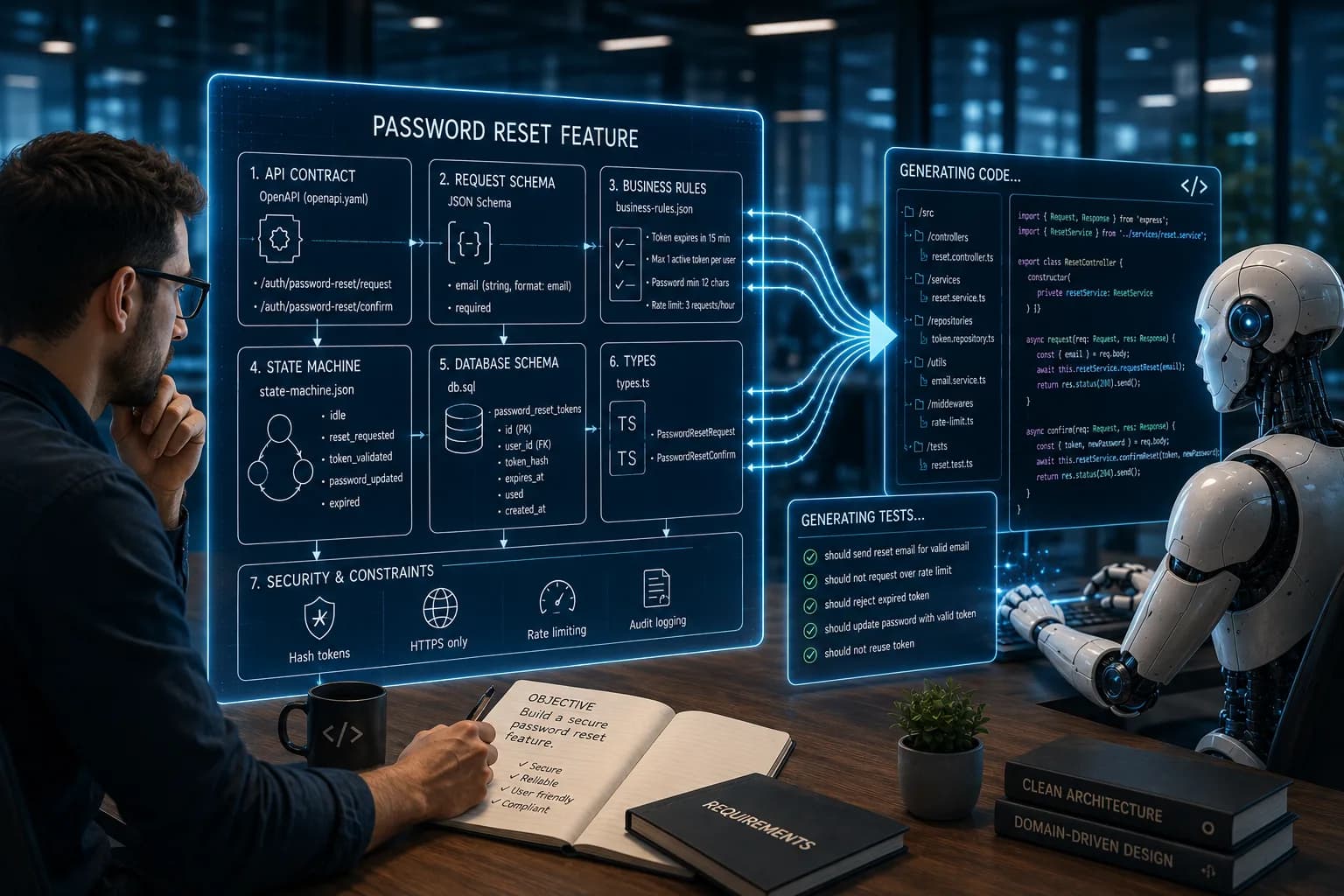
AI Spec-Driven Development: why structure matters more than ever
AI makes writing code easy — but it also amplifies ambiguity. AI Spec-Driven Development uses structured specifications to reduce hallucinations, enforce security, and ensure generated software aligns with real-world requirements.
Read More →
Are VPNs Still Private in 2026? Here’s the Honest Answer
VPNs were once sold as a magic invisibility switch — click “connect” and you disappear online. In 2026, that promise doesn’t hold up the same way. While VPNs still encrypt your traffic and hide your IP address, modern tracking goes far beyond that. From browser fingerprinting to subtle connection leaks, staying private today requires more than just turning on an app. So the real question isn’t whether VPNs work — it’s whether they’re enough.
Read More →